What is a good Net Promoter Score (NPS)?
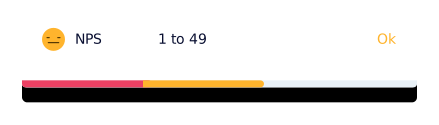
A NPS that is greater than 0 is considered OK. Any score below 0 means you've got work to do to improve customer satisfaction. In general, your goal is to strive to the highest NPS possible.
While some of us are over-achievers and we must get that 100 score, it is important not to fixate on just the metric. Listen to your customer's feedback, and take to heart their experiences both good and bad. If you're growing and learning by understanding your NPS, you're using it correctly.

Remember, every industry is different. It is best to compare your NPS to your peers and industry for a more relevant indication of your specific performance.

Related Articles
How is Net Promoter Score (NPS) calculated?
Net Promoter Score (NPS) is a whole number from -100 to +100, where +100 is the best score, simply put it is calculated as the % Promoters minus the % Detractors. Here's the formula: NPS = [ (Promoters - Detractors) / Total NPS Respondents ] x 100 ...
What are common NPS scales?
There are 3 typical scales that you see used on Net Promoter Score survey questions: The traditional 11-Point numerical scale, the simplified 5-phrase scale, and the basic 3-icon scale. Each scale has its pro's and con's. As a general rule, you want ...
Understanding Net Promoter Score (NPS)
The NPS metric, like all standardized metrics, is calculated using a specific formula. In the case of NPS, the formula is %Promoters - %Detractors, giving a score of -100 to +100. You can see the formula by clicking Help ("?" icon) in LoyaltyLoop. ...
Why is someone a Detractor if they answer "not sure" to my NPS question, but they answer "satisfied" on all other questions?
The terms Promoters, Passives and Detractors come solely from the customer's response to the Net Promoter Score question on your survey (aka your "recommend" question.) There are 3 Customer Experience (CX) questions typically used on our surveys, ...
What is Net Promoter Score (NPS)?
NPS is an industry-standard measurement of customer experiences and predictor of future business performance. The metric is based on how customers answer the question: "How likely is it that you would recommend [brand or company] to a friend or ...